
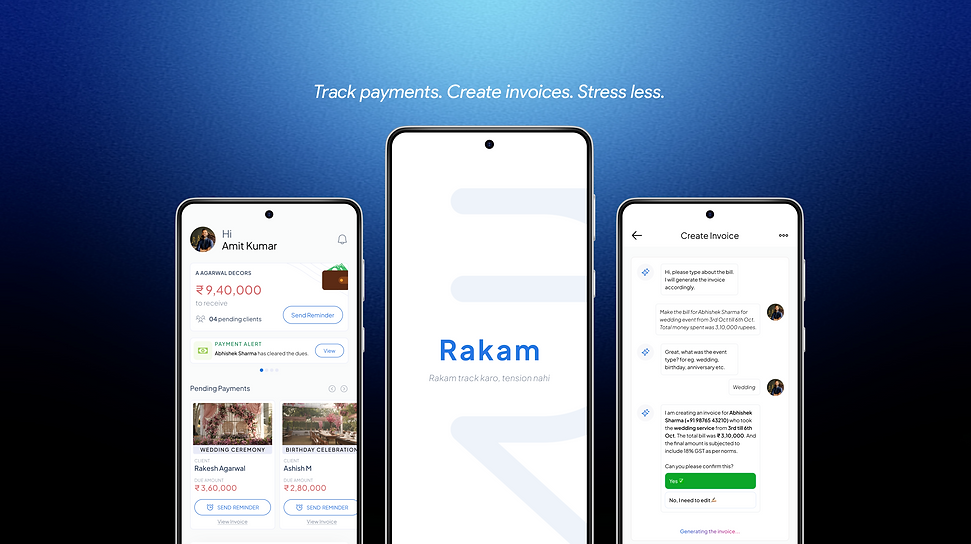
Micro-businesses in India still rely heavily on WhatsApp chats, spreadsheets, and manual bookkeeping to manage invoices and payments. Existing ERP systems are often built for enterprises, making them expensive, overwhelming, and difficult to adopt for smaller teams.

'The project originated from a real-world problem statement published by Razorpay FixMyItch.'
Micro and small businesses spend hours every week manually creating invoices, tracking payments, and sending reminders. Existing ERP tools are often too expensive, complex, and intimidating for small teams.
No centralized payment tracking
How might we
help micro-businesses manage invoices and payment tracking in a way that feels lightweight, intuitive, and stress-free?
Complex accounting tools not built for small businesses
Low digital confidence among business owners
Manual invoice creation
Payment follow-ups done over calls/WhatsApp
Primary Research
User Interviews
Workflow Observation
8 Micro & Small Business Owners
Mobile-first
users
Businesses operating through WhatsApp and informal communication channels
Age Group:
25–42 years
Insight 1 :
Invoicing happens inside chats
“Most conversations already happen on WhatsApp, so invoices are usually discussed there too.”
"Business owners mentally associate invoicing with communication, not accounting."
Insight 2 :
Payment reminders feel socially uncomfortable
““I feel awkward asking clients repeatedly for money.””
"Follow-ups are emotionally stressful, especially for small business owners dependent on referrals and relationships."
Insight 3 :
Existing tools feel intimidating
“I only need basic invoices, not a full accounting system.”
"Enterprise-grade dashboards create cognitive overload for users with simple workflows."
Insight 4 :
Mobile is the primary workspace
"Most users manage invoices directly from their phones while traveling, at events, or during client meetings."
Quantitative Data Synthesis

Use Whatsapp for
payment
communication
Tracks payment
manually
Feels existing software is too
complex
Prefers mobile-first
workflows
Delay payment reminders due to
hesitation
87 %
75 %
68 %
91 %
72 %
Secondary Research
1. Small businesses struggle with delayed payments
Key Insight:
Late payments directly affect cash flow and create financial stress for small business owners.
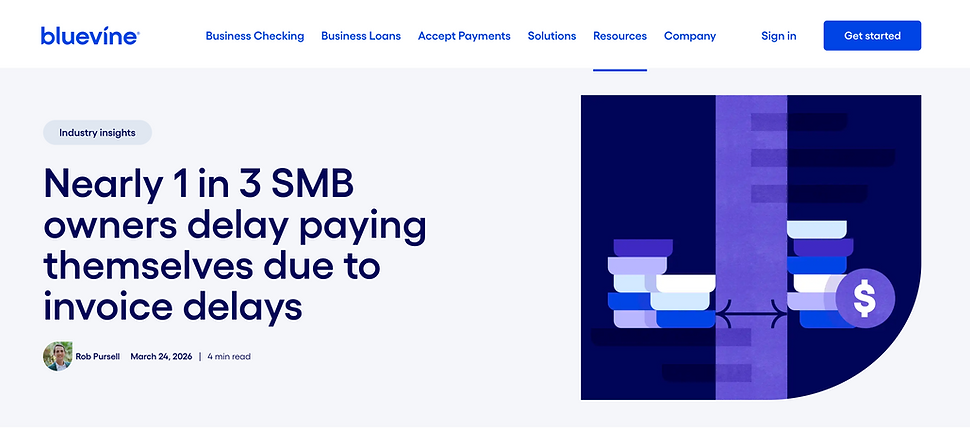
59% of SMBs experience delayed payments
Nearly 1 in 3 business owners delay paying themselves because of unpaid invoices
Invoice delays affect payroll and growth planning
Source : Bluevine SMB Payment Delays Report
This validates the need for faster invoice tracking and payment reminder systems.
2. Manual invoice management is expensive and error-prone
Key Insight:
Small businesses still rely heavily on manual invoice workflows despite the availability of digital tools.
Manual invoice processing costs businesses $12–19 per invoice
Nearly 39% of invoices contain errors
More than half of invoices are paid late
This highlights the opportunity to reduce operational friction through simplified workflows and automation.
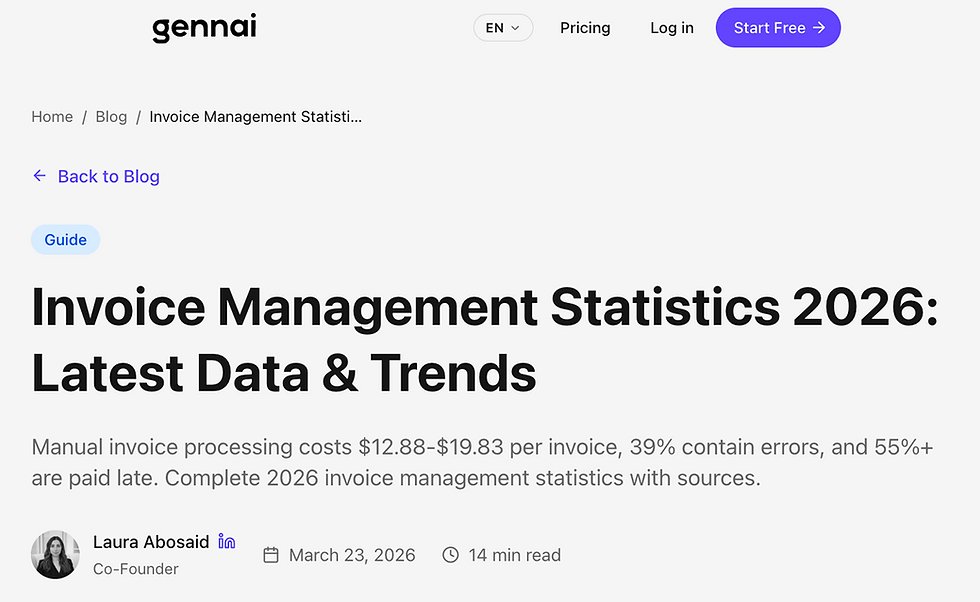
Source : Invoice Management Statistics 2026
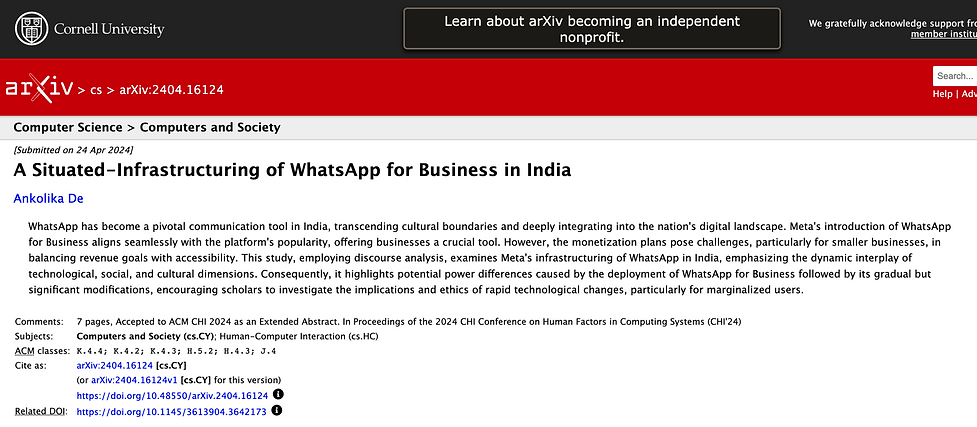
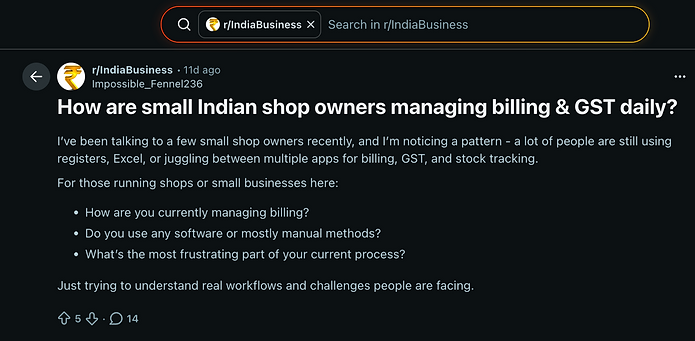
3. Indian small businesses heavily depend on WhatsApp workflows
Key Insight:
Many small businesses already manage communication, payments, and customer coordination through WhatsApp.
Small businesses prefer familiar communication tools
Users struggle when platforms become overly “professional” or complex
Informal conversational workflows dominate daily business operations
This became the foundation for the conversational invoice creation flow in the app.
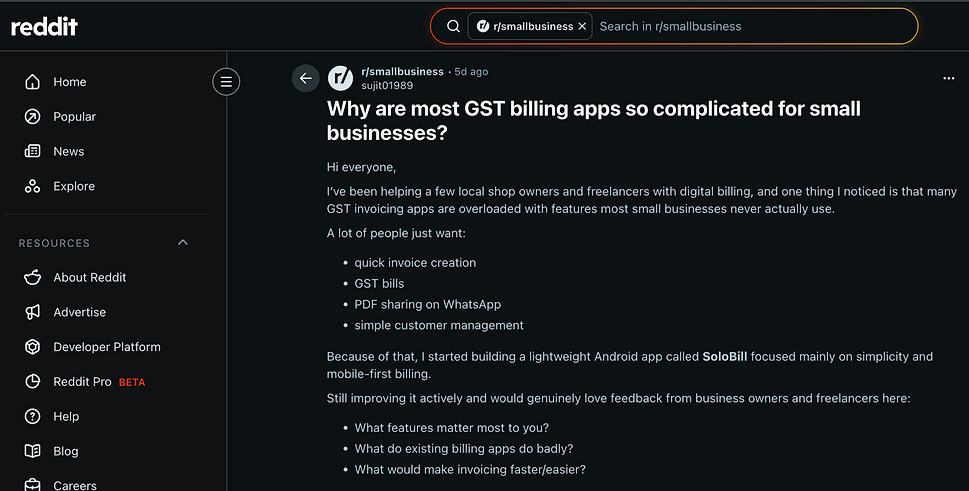
4. Existing GST & billing systems feel overwhelming
Key Insight:Small business owners often feel GST billing tools are overloaded with unnecessary features.
This reinforced the need for a lightweight, mobile-first experience instead of an enterprise-style ERP dashboard.
-
quick invoice creation
-
WhatsApp sharing
-
payment tracking
-
simple GST billing
Businesses only want:
Multiple disconnected tools create confusion
Manual reconciliation is
common
Translating
Insights into
Opportunities
Research revealed that users were not struggling with invoicing itself; they were struggling with the complexity and stress surrounding financial management.
This led to exploring:
how payment tracking could feel less overwhelming
how existing communication behavior could influence the experience
how invoicing could feel lighter

Simplify invoice creation
Complex ERP workflows
Users already use WhatsApp
Opportunity Mapping
Payment reminders feel awkward
Too much financial jargon
Mobile-first business workflows
Design Opportunity
User Pain Point
Introduce conversational interactions
Create low-friction reminder actions
Use familiar, human language
Design entirely for mobile usage
User Persona

“I just want a simple way to create invoices and keep track of who still has to pay.”
Amit Kumar
Decorator & Event Service Provider
34 years • Bhopal
Amit runs a small decoration and event setup business with a team of 3–4 people. He manages multiple clients simultaneously and handles most business operations directly through his phone while travelling between event sites.
-
Create invoices quickly during or after events
-
Track pending payments in one place
-
Send reminders without repeated manual follow-ups
-
Maintain a professional image with clients
-
Avoid spending too much time on administrative tasks
-
Existing accounting apps feel too complex
-
Payment tracking happens across chats, notes, and spreadsheets
-
Repeatedly asking clients for payments feels uncomfortable
-
Manual invoice creation takes unnecessary time
-
Hard to keep track of multiple pending dues simultaneously
-
Uses WhatsApp for most client communication
-
Relies heavily on mobile devices for work
-
Prefers simple and fast workflows
-
Usually multitasks during client meetings and events
-
Avoids feature-heavy ERP systems
-
A lightweight invoicing system
-
Conversational invoice creation
-
Quick payment reminders
-
Mobile-first accessibility
-
Clear visibility of pending payments
Feature Prioritisation - MoSCoW Method
The MoSCoW framework was used to prioritise features based on user needs, business impact, and MVP feasibility. Features were categorised into Must Have, Should Have, Could Have, and Won’t Have to define the core product scope clearly.
Must Have
Core features essential for the product experience.
-
AI-powered invoice creation
-
Manual invoice creation
-
Payment tracking dashboard
-
Pending payment reminders
-
Invoice sharing
-
Mobile-first onboarding
-
Payment history tracking
Should Have
Important features that improve usability and efficiency.
-
Smart payment alerts
-
Invoice search & filters
-
GST auto-calculation
-
Editable invoice templates
-
Conversational confirmation flow
Could Have
Nice-to-have features that enhance the experience but are not critical for the MVP.
-
Voice-based invoice input
-
Multi-language support
-
Invoice analytics & insights
-
Dark mode
-
Custom themes & branding
Won’t Have (For Now)
Features intentionally deprioritised to keep the product lightweight and focused.
-
Inventory management
-
Full accounting system
-
Payroll management
-
Advanced taxation reports
-
Desktop-first ERP workflows
Key Takeaway
The prioritisation process helped focus the product around its primary goal - simplifying invoicing and payment tracking for micro-businesses without introducing unnecessary complexity.
Rakam
Invoice management for micro-businesses, redesigned for simplicity.
Introducing...
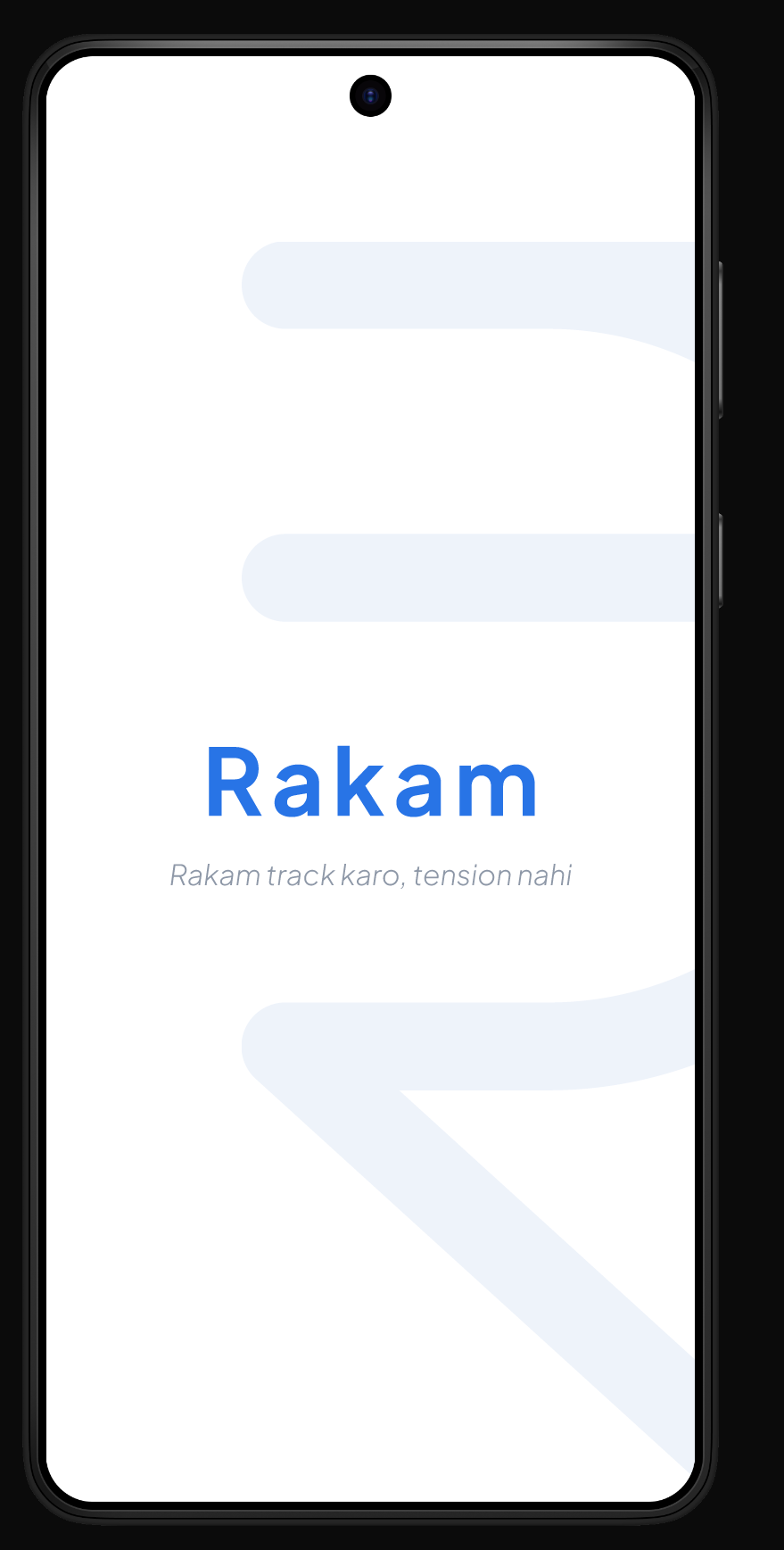
A mobile-first invoicing experience helping small business owners create, track, and manage payments without complex ERP systems.
Helping small business owners create, track, and collect invoices without learning complicated accounting software.
The solution evolved into a conversational workflow inspired by how users already communicate through WhatsApp and messaging apps.

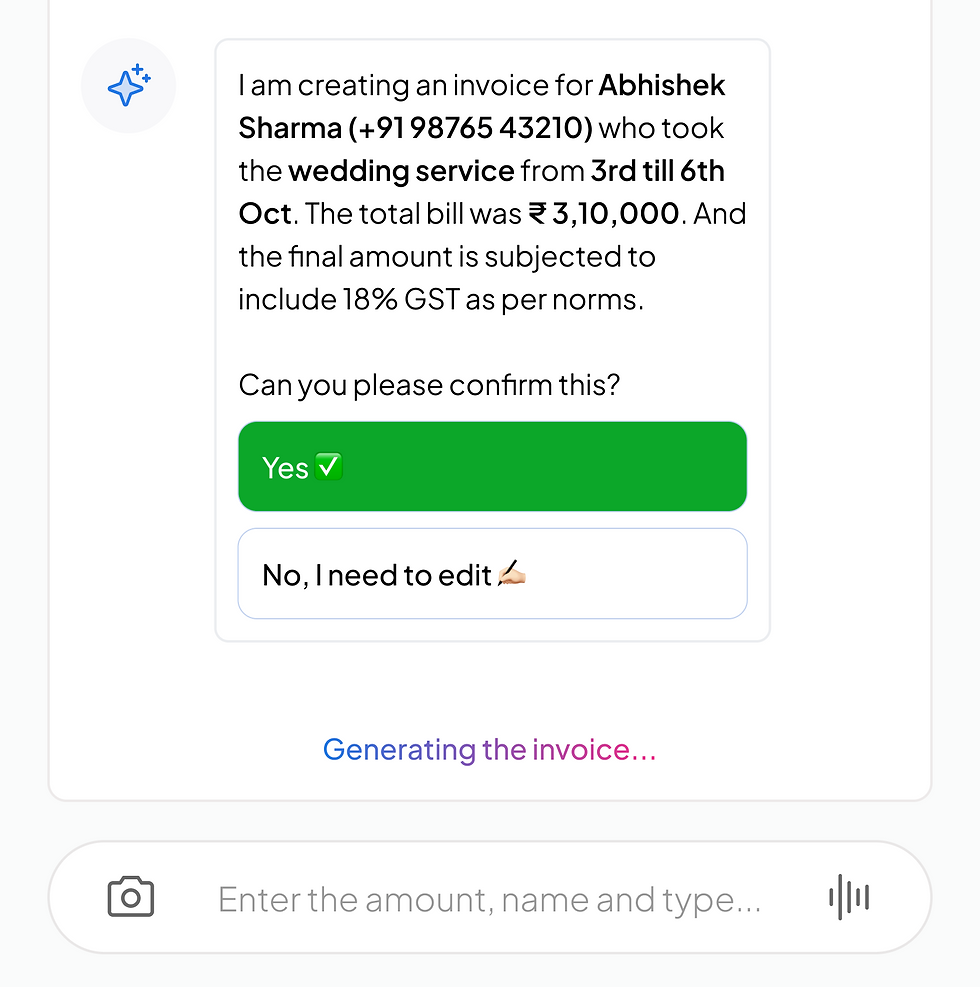
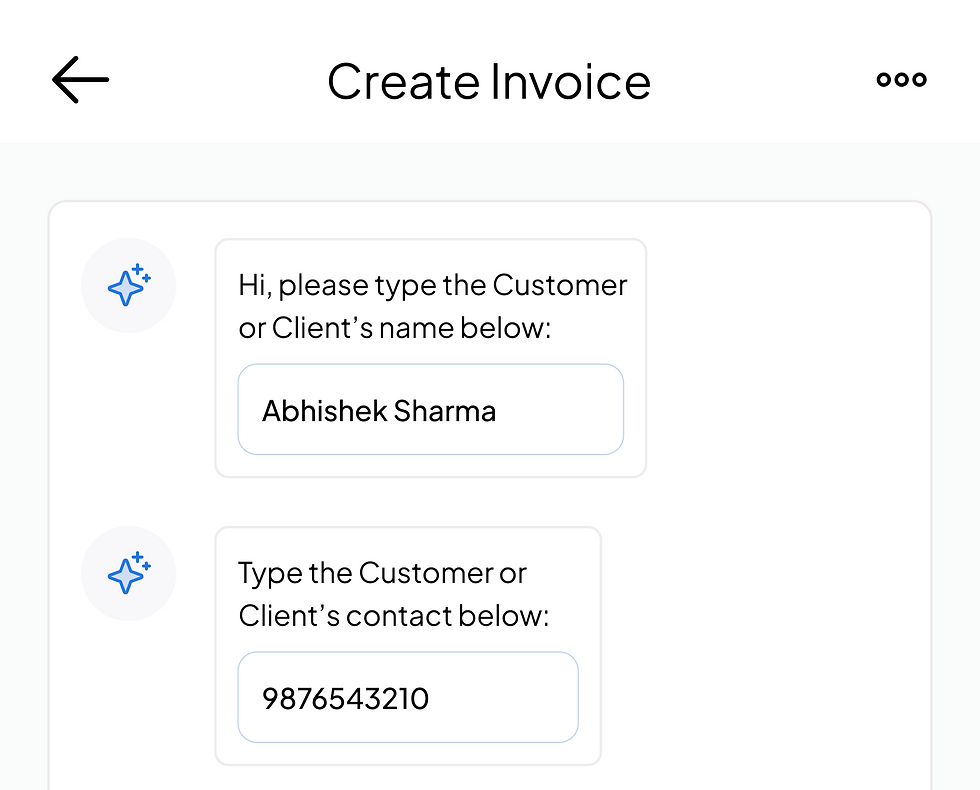
AI interaction
Invoice generated from text
Chat UI
Why
Conversational
UI?
Insight
Most business conversations - including payments, negotiations, and reminders, already happen through chat platforms.
Design Decision
Rather than forcing users into accounting-style interfaces, the experience adopts familiar conversational patterns to reduce cognitive effort.
ONBOARDING
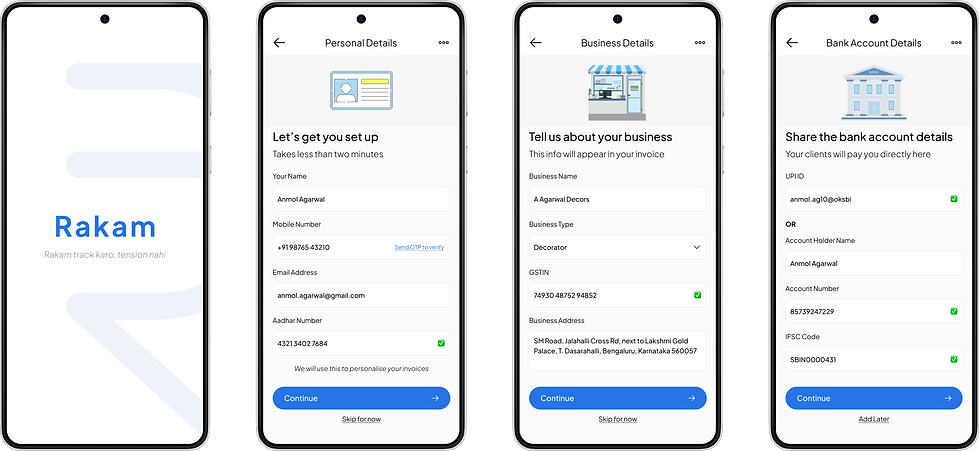
Splash Screen
Introduces the brand with a calm and approachable first impression.
Personal Details
Collects essential user information through a simple and guided onboarding flow.
Business Details
Captures business information required for generating personalized invoices.
Bank Account Details
Allows users to securely add payment details for seamless client transactions.
Payment Tracking Dashboard
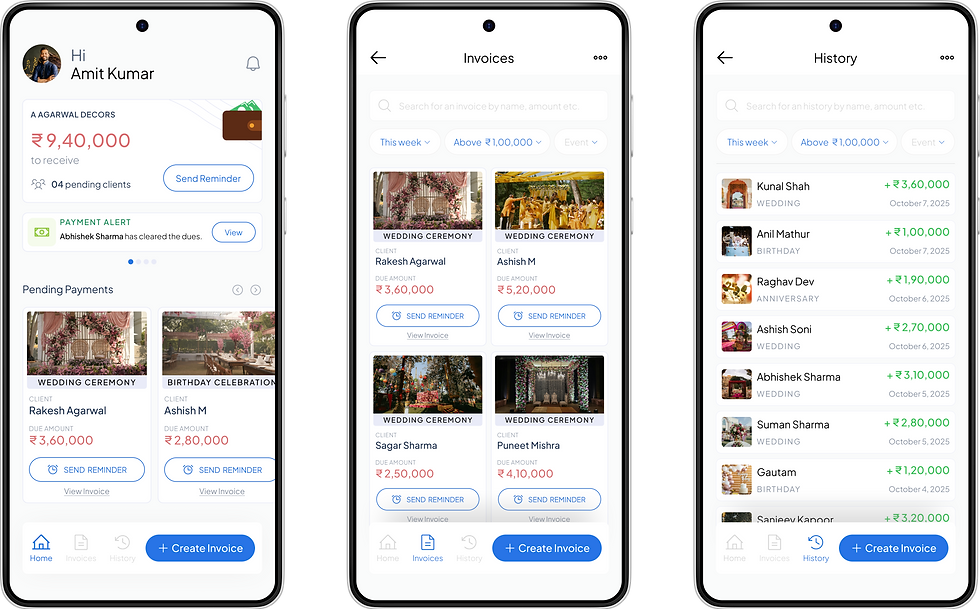
Dashboard Home
Provides a quick overview of pending payments, alerts, and outstanding client dues in one place.
Invoices Screen
Helps users manage, track, and send reminders for all active invoices efficiently.
Payment History
Displays completed transactions and past payment records for easy reference and transparency.
INVOICE CREATION
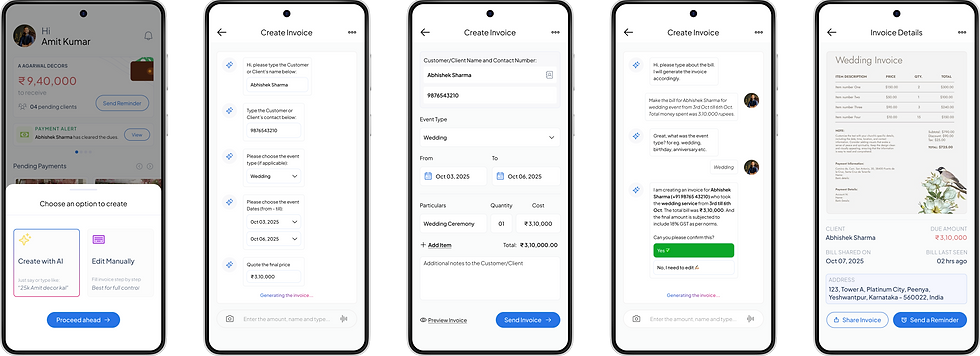
Invoice Creation Options
Allows users to choose between AI-assisted invoice generation or manual invoice creation based on their preference.
AI Guided Invoice Flow
Guides users through invoice creation using conversational prompts and natural language interactions.
Manual Invoice Creation
Provides a structured form-based workflow for users who prefer full control over invoice details.
Conversational Confirmation Flow
Confirms invoice details in a chat-like format before generating the final invoice.
Invoice Details Screen
Displays the final invoice with payment details, sharing options, and quick reminder actions.
Design Principles

Reduce
Friction
Simplify accounting-heavy workflows into fast, guided interactions that feel lightweight and approachable.

Familiar & Conversational Interactions
Use chat-based patterns and natural language inputs inspired by everyday messaging behavior users already understand.

Clarity Through
Simplicity
Break complex financial tasks into smaller, guided steps to reduce cognitive overload and improve usability.

Build Trust &
Confidence
Design payment tracking and reminders in a way that feels transparent, stress-free, and easy to manage.

Speed &
Accessibility
Create a mobile-first experience that enables users to quickly create, track, and manage invoices on the go.
Reflection
Rakam was an attempt to rethink invoicing beyond traditional accounting systems.
By combining conversational interactions, lightweight workflows, and mobile-first thinking, the project explores how financial management can feel simpler, faster, and less stressful for micro-business owners.
This experience taught me that sometimes the most impactful design decisions are not about adding more features, but about removing friction.
Thank You!